How Modern Technology Is Improving the Production and Use of Steel Products
The construction industry has been revolutionized by technology in just about every aspect. It begins with the design of a building and project planning and extends to manufacturing and delivery of the materials. This change is also helping steel products, as manufacturers are now using more accurate methods for fabricating products, more efficient production processes, and more quality-control measures.
For contractors and builders, reliability of RW products can be one of a variety of steps. It combines reliable supply of steel with streamlined construction processes. RWAP provides reinforcing steel, reo mesh, trench mesh, wire products and fabricated components to the construction and industrial sector throughout Sydney.
Digital Planning: A Strategy for Changing the Nature of Construction
Digital planning tools are one of the major technological advances in the construction industry. Construction teams use BIM, computer-aided design, digital estimating and project management software to create more complete plans before they start building. Accurate digital drawings can be used for steel reinforcement to calculate the size, shape, quantity and position of steel bars. These details can be used to help with the fabrication and ordering process.
This makes it easier to have more cohesive workflow. Design, material procurement, manufacturing and installation do not need to be separate tasks, but can be managed together with the sharing of information. Even better planning can help to recognize potential conflicts before they become an issue during construction. The reinforcement, for instance, could have to bend around openings, services, structural elements or other parts. Early identification of these requirements can minimize costly changes at construction sites.
Prefabrication and Off-Site Production
The use of prefabricated construction parts is another important development. Manufacturers can fabricate some of the steel assemblies in an environment where the manufacturing process can be controlled rather than complete fabrication at the building location. The prefabricated structures like reinforcement cages can be produced in the workshop based on the engineering drawings before they are delivered to the site.
Benefits of Off-site Construction
There are some practical benefits to off-site fabrication.
1-Restrictions to Construction Site
Production may be carried out in a production space that has been purpose-built for production. All workers are provided with suitable equipment and work areas without all the limitations of an active construction site.
2-More Efficient Labor
Use of prefabrication helps minimize cutting, bending and onsite assembly work. This could aid contractors in the organisation of personnel.
3-Simple Installation
The pre-prepared parts may potentially ease installation. If the reinforcement that teams need is ready to be placed, that means that the teams do not have to perform any fabrication activities at the work area.
Inventory Management through the Right Technology
The world of construction materials is also undergoing a transformation, as technology plays an increasing role in the ordering and management of materials. In the construction industry, steel products can be used in significant amounts in a project. Stock outages, ordering the wrong products, or finding out a particular product is not in stock can cause disruption to the schedule.
An inventory system that is managed digitally can be useful in tracking what materials are in stock and help with ordering. A more systematic record of the quantity, specification, delivery and project timings of products can be kept. Improved inventory control can help suppliers to ensure more consistent ordering and preparation. It can help contractors better manage procurement with construction schedules.
The advantage is particularly pronounced with projects that encompass several materials. Reinforcing bars, mesh, tie wire, fitments, fencing products and fabricated components might all require different requirements.
More Data-driven Quality Control
Additionally, technology has been a significant help in quality control. While traditional inspection methods are still vital, the use of digital tools can provide an extra layer of uniformity. Measurement, specification, production records and inspection data can be recorded and inspected with a greater degree of systematicness. To ensure the quality of steel reinforcement, dimension, quantity, shape, bend, and other requirements can be checked before the materials are taken out of the factory.
Technology can help create safer construction workflows.
It’s not just about speed and productivity, it’s also about construction technology. It can also help to make the working environment safer. For instance, some repetitive or physically intensive tasks can be removed from the chaotic construction site through prefabrication. Produce components prior to the site and this can minimise the need for fabricating around other trades.
By planning better, there’s less wasteful movement of materials. If teams are aware of the materials required and when they are needed, they can deliver these materials more effectively. Documentation of project information in a digital format can also facilitate the understanding of installation needs prior to work starting.
The Future of Steel Manufacturing
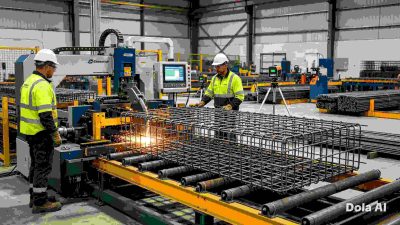 In years to come, the future of steel production, design, logistical and installation aspects may be even more integrated. The production of accurate components that can be produced in an efficient manner will continue to be significant as construction projects grow in complexity. Skilled fabricators, equipped with up-to-date machinery and streamlined production processes, can assist contractors in meeting these challenges.
Technology could also enable custom fabrication to be more readily available. Projects can increasingly utilize components that are specifically designed for their structural and operational needs in addition to using standard components.
Conclusion
The steel industry is being transformed by technology, which is enhancing planning, fabrication, prefabrication, quality control, inventory management and communications. Such advancements can enable construction firms to handle more complex projects and make sure they stick to accuracy and reliability. The benefit to technology for builders, contractors, engineers, and fabricators isn’t really just because it’s new hardware.
It is derived from the ability to link up reliable information, skilled people, reliable materials and efficient processes. Steel will be a significant contributor to digital construction’s evolution. With the help of modern technology and skilled fabricators, workflows can be more organized, accurate, and accommodating to the needs of today’s construction industry.



 The rise of remote work has changed how and where people do their jobs. For tech professionals, this has opened the door to new work-life possibilities. One major development is the digital nomad visa from whywaititaly.com, a type of visa that allows remote workers to live in another country while continuing to work for a company based elsewhere.
 This sensor works by measuring the intensity of the lights surrounding it. Natural light and artificial light present inside the room can also be detected using ambient light sensors. When this sensor changes, it creates a smooth lighting transition in a chandelier throughout the day.

 Actually, many of the innovations were developed consequently to make the towing and recovery industry more responsive to the needs of motorists who drive highly advanced automobiles, including electric vehicles and self-driving cars.
 Towing companies who need to respond quickly to calls for roadside assistance are able to do so by using a digital dispatch system (DDS). A DDS sends calls directly to the mobile phone of the company’s tow truck drivers. That way, the dispatcher can easily get in touch and dispatch the nearest available tow truck driver to the site from where the distressed customer is calling.


 The graphics processing unit (GPU) is one of the most important components in a gaming PC. It determines how well games look, how smoothly they run, and whether your system can handle modern visual effects. As any trusted gaming hardware blog will explain, GPU manufacturers continue to introduce technologies that improve graphics quality, increase frame rates, and


 When your followers do something, like visit your site, subscribe, or buy something, you get a return on investment (ROI). You can use analytics tools like Instagram Insights and Google Analytics to keep tabs on:
 When we think of chandeliers, we often picture grand, shimmering fixtures hanging in ballrooms, historic mansions, or luxury hotels. Traditionally, chandeliers have been symbols of elegance and opulence, but today, they are evolving beyond mere aesthetics. Crown your room with a sleek modern chandelier that not only enhances style but also integrates advanced technology. With IoT, automation, and AI, chandeliers are now smart lighting solutions that boost convenience, efficiency, and ambiance.
 Technology has revolutionized how artists share their music. Gone are the days when submitting a demo meant mailing CDs or visiting radio stations in person. Now, online platforms, streaming services, and apps allow musicians to get their songs in front of millions with just a few clicks. The free Spotify playlist submission, in particular, has become a game-changer for artists who want to grow their audience and gain exposure.









 We are constantly connected to technology, which can make it difficult to stay present and mindful in our daily lives.It’s very easy to become distracted and unproductive due to overwhelming notifications, emails, and other messages. Taking the time to pause and refocus on your goals is essential in order to stay productive. However, practicing mindfulness can help us stay grounded and present, even in the
